Non- formal education methodologies
This last phase is conceived as a “reflection phase” to ensure all the practices carried out within this framework can be useful and fruitful. The scope is to analyze and assess the non-formal education methodologies applied in previous phases, test their adaptation and transferability to be applied to other target groups. This test will be done through inter-generational workshops carried out locally with the target youth. A hybrid virtual/in person symposium will also be organized to actively bring together the partner’s experiences on this subject and to contextualize those experiences.
Metodoloxías de educación non formal
Esta última fase concíbese como unha “fase de reflexión” para garantir que todas as prácticas realizadas neste marco poidan ser útiles e fructíferas. O obxectivo é analizar e valorar as metodoloxías de educación non formal aplicadas en fases anteriores, comprobar a súa adaptación e transferibilidade para ser aplicadas a outros colectivos destinatarios. Esta proba realizarase a través de obradoiros interxeracionais realizados localmente coa mocidade destinataria. Tamén se organizará un simposio híbrido virtual/presencial para reunir activamente as experiencias do socio sobre este tema e contextualizar esas experiencias.
1. BioArtLab as a Transfeminist queer pedagogies to embrace Posthumanism
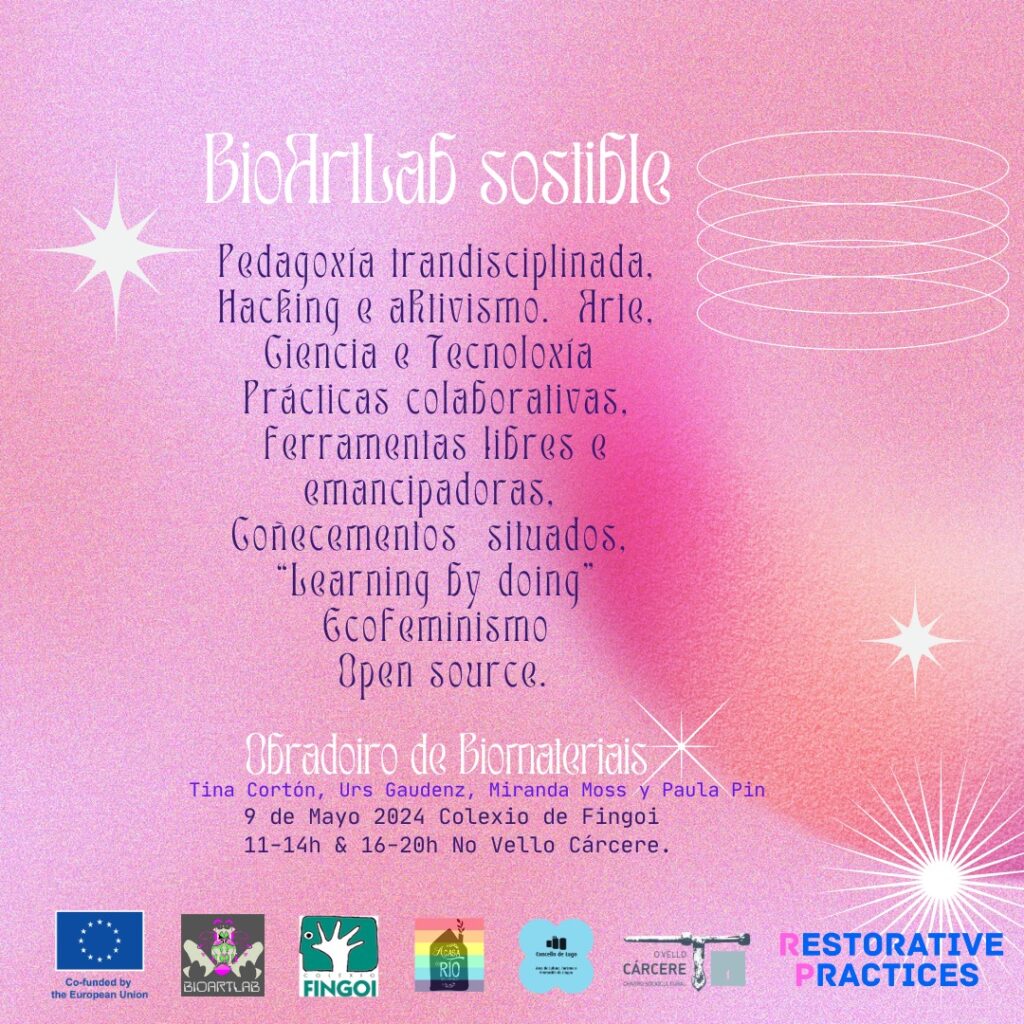
1.1. BIOMATERIALS with the Palas de Rei students
What are they? What are they for? How?
The laboratory consists of three sessions:
1 – Introduction Session
In this first session, we will discuss the importance of using ecological materials such as biomaterials.
What are they? What are they made of?
We will explore their composition, origins, and environmental impact, as well as their potential as sustainable alternatives to conventional materials.
2 – Collective Material Library
In the second session, participants will collectively create a material library.
This involves recovering and revisiting recipes that have already been tested in other contexts, while also opening space for new recipes, experimentation, and innovation.
3 – Feminist Fanzine Session
The final session will focus on creating feminist fanzines to document the processes, reflections, and outcomes developed throughout the laboratory.
This session highlights documentation as a creative and political act, giving visibility to collective knowledge and experimentation.
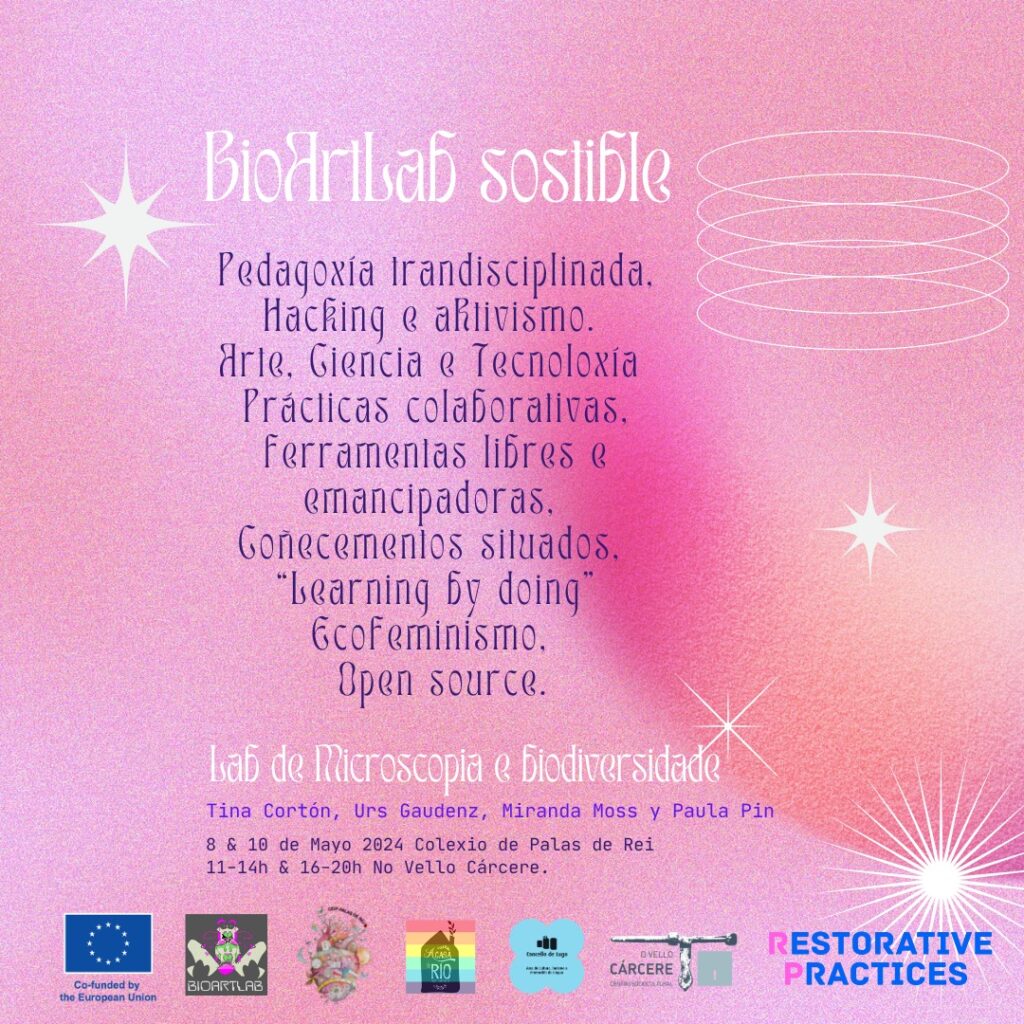
1.2. BIODIVERSITY & MICROSCOPY with Fingoi students
BUILDING A MICROSCOPE
The laboratory consists of three sessions:
1 – Practical Construction Session
In this first hands-on session, we will work collectively to build a microscope using a webcam. Through this process, participants will gain access to the invisible world around us, exploring what cannot be seen with the naked eye.
2 – Microorganism Mapping
In the second session, participants will collaboratively create a map of the microorganisms present in the local area.
We will discuss microbiology, the micro-world, and its relationship with our bodies and the surrounding environment, drawing from the endosymbiotic theory of Lynn Margulis.
3 – Feminist Fanzine Session
The final session will focus on creating feminist fanzines to document the processes, reflections, and discoveries developed throughout the laboratory.
Throughout the development of the workshops, we will be joined by the mobile laboratory CyanoVan as an interactive element for carrying out experiments.
1.3. BIODIVERSITY & DRAWING with Casa Arrigada
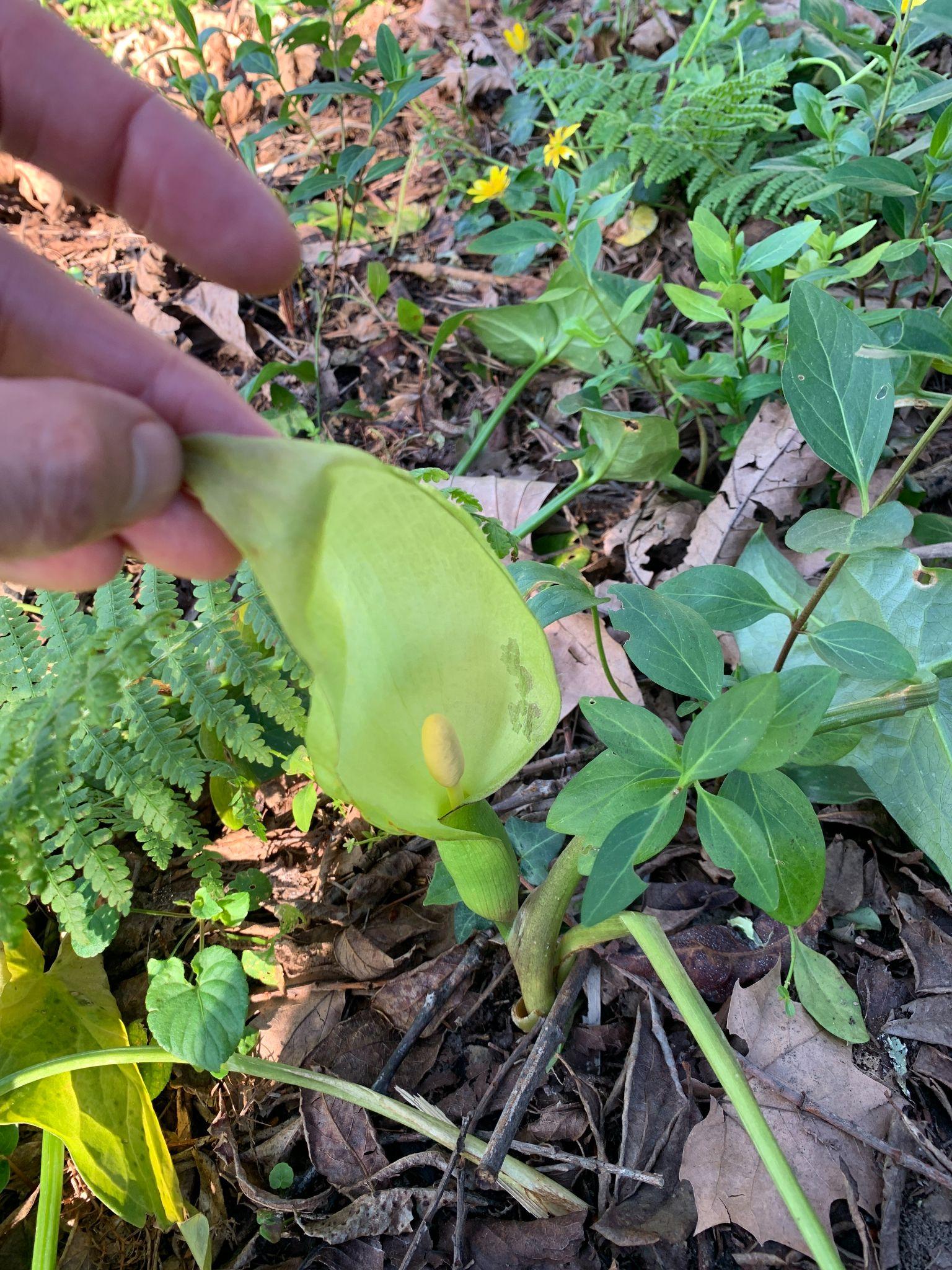
Identification and drawing of plants in the gardens of Casa Arrigada. Identification of medicinal and edible plants in the riverside walk Río Mero.
Introduction
Casa Arrigada is a cultural place in Cambre, a town with 24,739 inhabitants in the province of A Coruña. Students from secondary school IES Afonso X o Sabio gather in this center to participate in cultural activities every wednesday afternoon. Casa Arrigada is a building from 1912 with gardens which have a great number of edible and medicinal plant species. Besides, it is near a riverside walk by the river Mero, which flows into the lake of Cecebre.
With these activities we suggested facilitating that these students learnt about the plants in their area, their uses, and also got new skills drawing these plants just as the naturalists would do it.
Precedents
The director of OMIX, Jesús Díaz, was contacted first to let him know about the project. Then he suggested we contacted the science and technology teacher Patricia Estraviz.
Daniel Pardo, in charge of these workshops, visited Casa Arrigada, its gardens and walked by the river to prepare the workshops and get documentation about the space.
Procedure
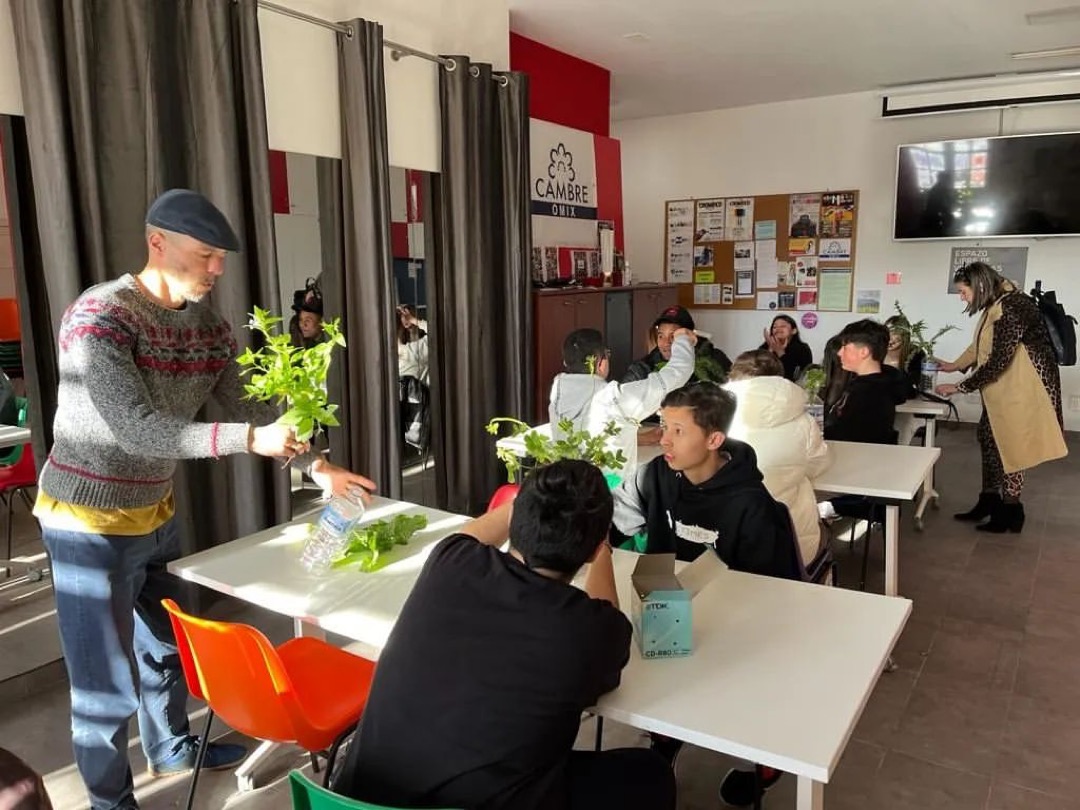
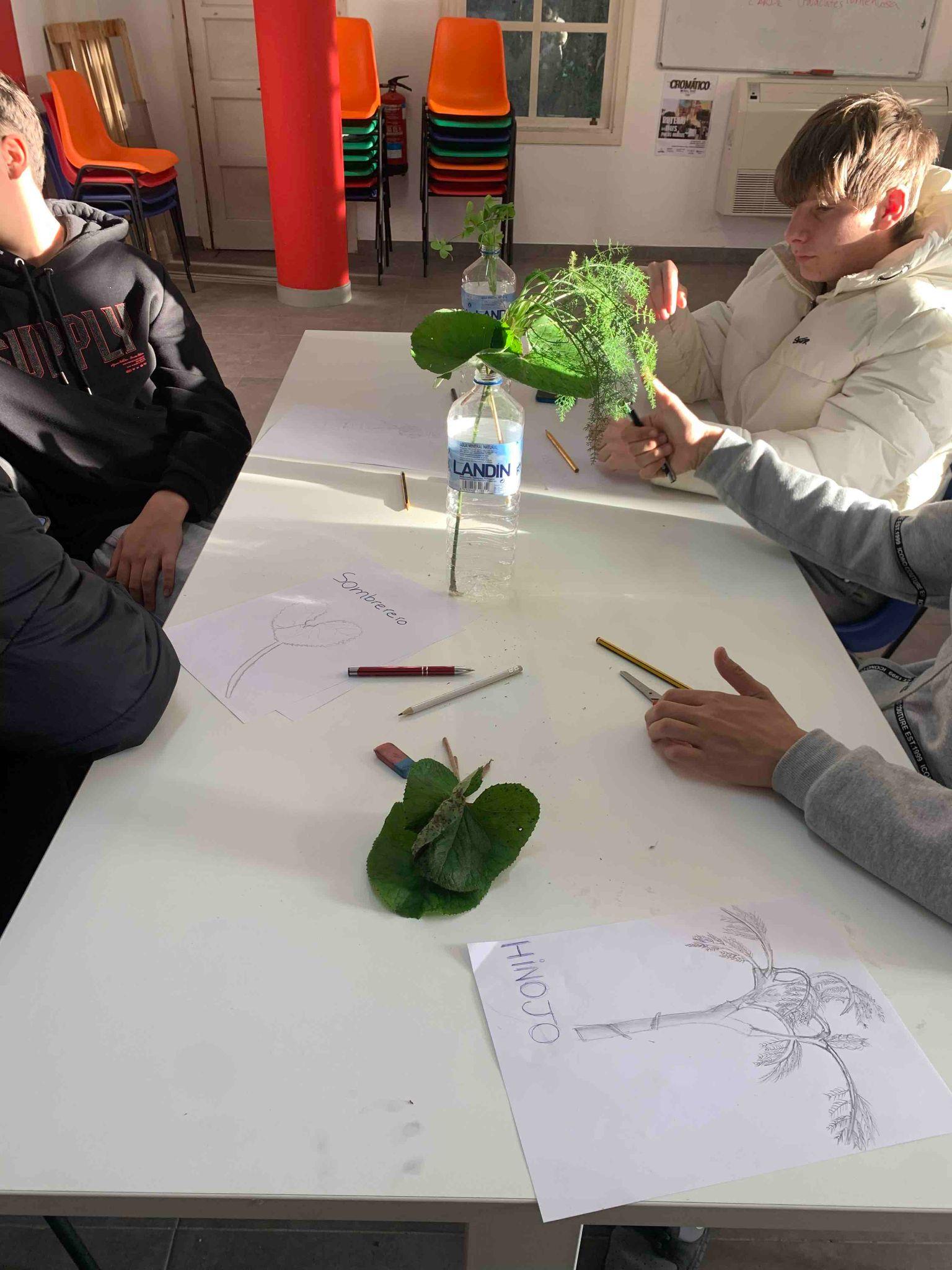
We gathered in Casa Arrigada on the first day, March 13th, and the students, the teacher and the director of OMIX, Jesús, walked with Daniel around the gardens to identify plant species with him. Then, after this the students picked some of these plants to draw them. Plants were placed in plastic bottles to keep them up on the tables and the students sat around them.
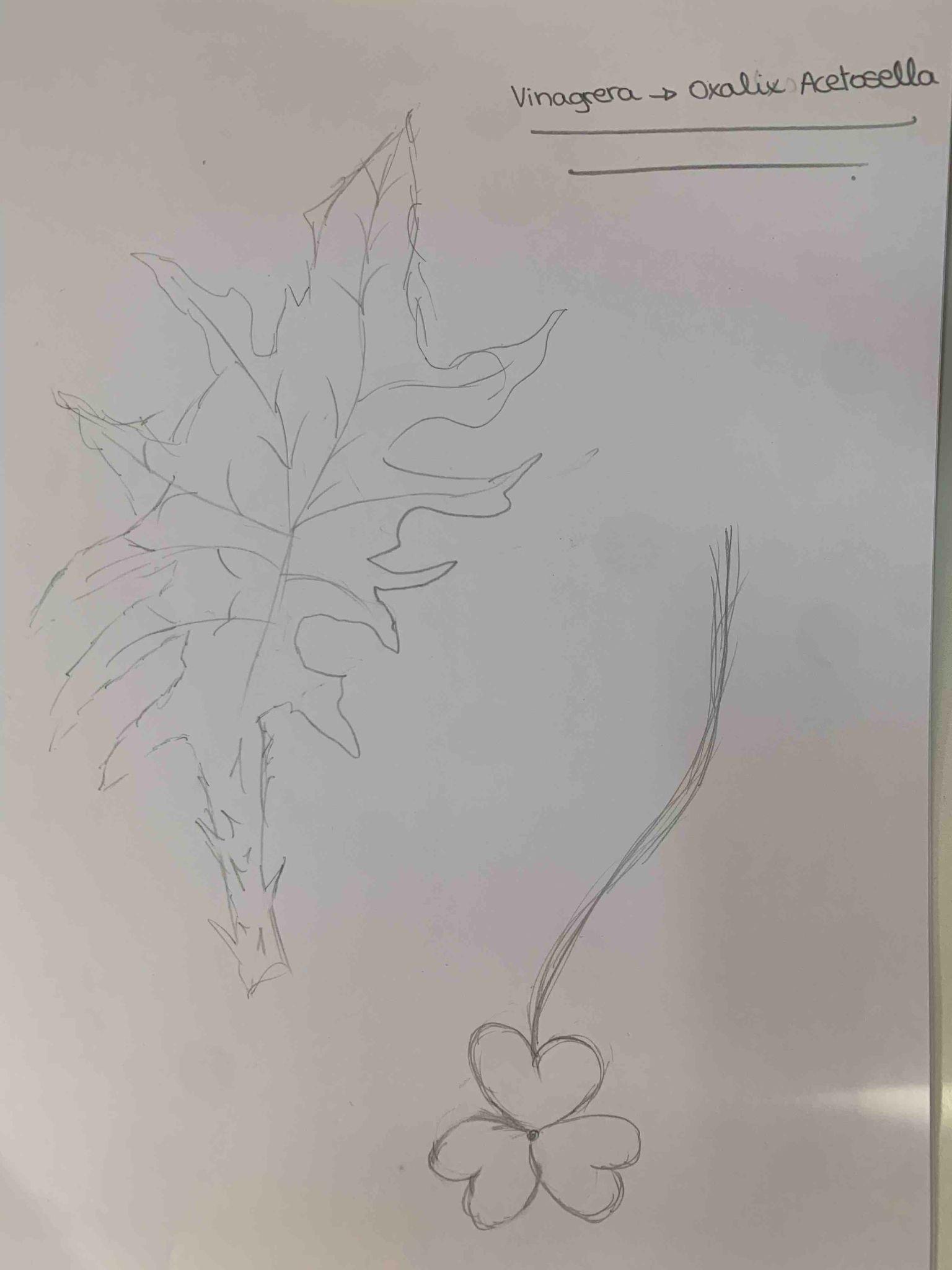
Next, Daniel taught them the basics on how to draw from nature. Paying more attention on the subject than the paper, by gazing more time at the plant than the hand that is drawing. Then they learnt to follow the outline of the plant, to draw its silhouette and then after that they started drawing the inside of the figure.
This same procedure was repeated when we walked alongside the Rio Mero. On the next session we had a look at books about naturalism and talked about famous naturalists in history like Karl Von Linnaeus, Jean Baptiste Lamarck, Darwin. They had a look at the books The Complete Amateur Naturlist guide by Michael Chinery and The Amateur Naturalist by Gerald and Lee Durrell. And we also looked at several botanic illustrations from the Victorian era to the present time.
In a two-hour walk through riparian forests, we talked about the use of many plant species and the students picked some of them: branches, leaves, flowers; to draw.
In this riverside walk we could also see bird, insect and fungi species and identify them.
Drawings were made of the chosen plant species again.
Results
The students got new skills learning about the local diversity and identifying edible and medicinal plants. They also were engaged in an artistic activity, improving their drawing skills.
Response
The response was quite good. Since these activities were made out of their school hours, we were surprised about their good behavior, interest and engagement. In general they expressed their satisfaction with the activities presented, their organization, the language and methodology used.

1.4. BUILDING nATURAL POND WITH STUDENTS
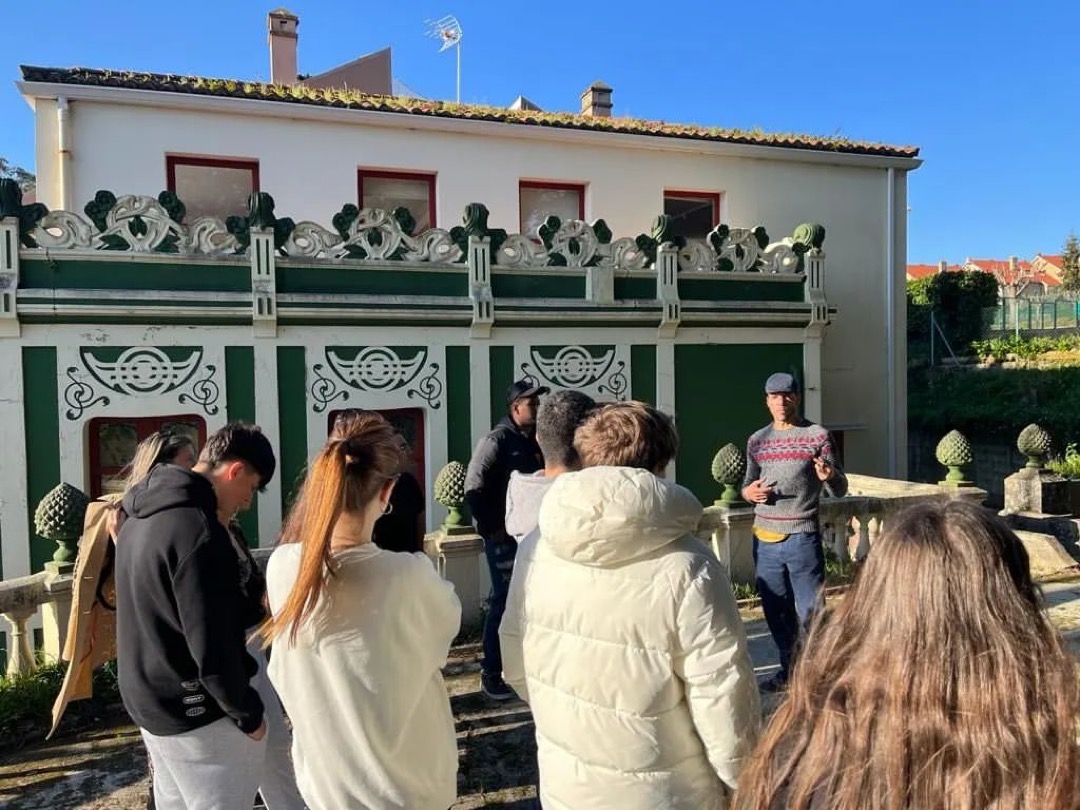
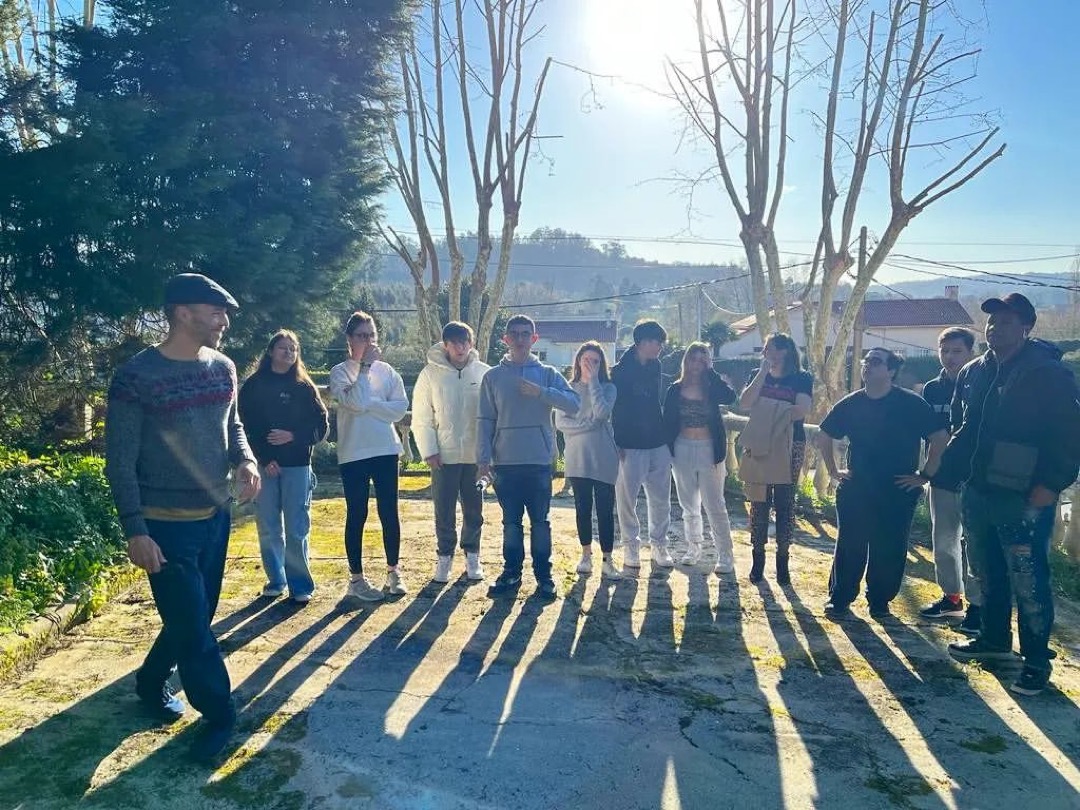
The building procedure of the natural pool happened as follows:
Since February 1st, we gathered every two /three weeks, whenever the weather allowed it, and the pond and gardens started to take shape.
First we started digging a pond that is 3.5×2.40 m. The digging was easy at first but it became harder as we encountered rock.
Then, we covered a grass field of about 5×5 m. with cardboard following Charles Dowding’s “No Dig” permaculture method.
Covering this cardboard with a mix of soil and manure, the first stage of the patch was created.
Then, several layers were made on the hole so as to have different levels for plants and animals to live. Then we covered the hole on the ground with a plastic tarp and put rocks on top to secure it.
In the meantime we planted some beetroots and dahlias in the veggie patch, because roots need to prepare the soil and oxygenate it.
We observed the first water beetles and mosquito larvae.
We couldn’t fill in the pond completely until April, and this is because we were waiting for the water tank we purchased to be installed. But the pond was already being filled with rainwater.
And the teachers and students started collecting water samples to observe on the microscope. They did this for months since February and watched the colonization of the pond with living beings: from algae to protozoa to the first invertebrates.
They continued to work on the veggie garden together creating also few more patches where we planted herbs and vegetables.
Finally in April the pond was filled with a mix of rainwater from a rainwater catchment system and water that has to be pumped from the spring to the rainwater catchment water tanks.
Plant species like Lemna sp. and Elodea sp. were added. We chose plants we could use in
bioremediation as the area is so close to the city and highways.
We were very surprised in mid april to find newts at the pond (Triturus sp.). We believe this is because there is a spring nearby called Fonte dos Frades and that’s where they came from, but we have no idea how they travelled all the way from there (it’s more than 500 m. away).
The pond is now slowly taking shape and getting filled with wildlife as the gardens keep growing and we hope to harvest vegetables such as mustard, cabbage, strawberries and beetroots this summer.
The students created videos of the pond building process as well as from microscope
observations. We are creating a final video including the process of pond and garden creation with the students and the results of a bioremediation workshop celebrated on may 16th. at this same place.